Apurbo Ahmed Jewel:
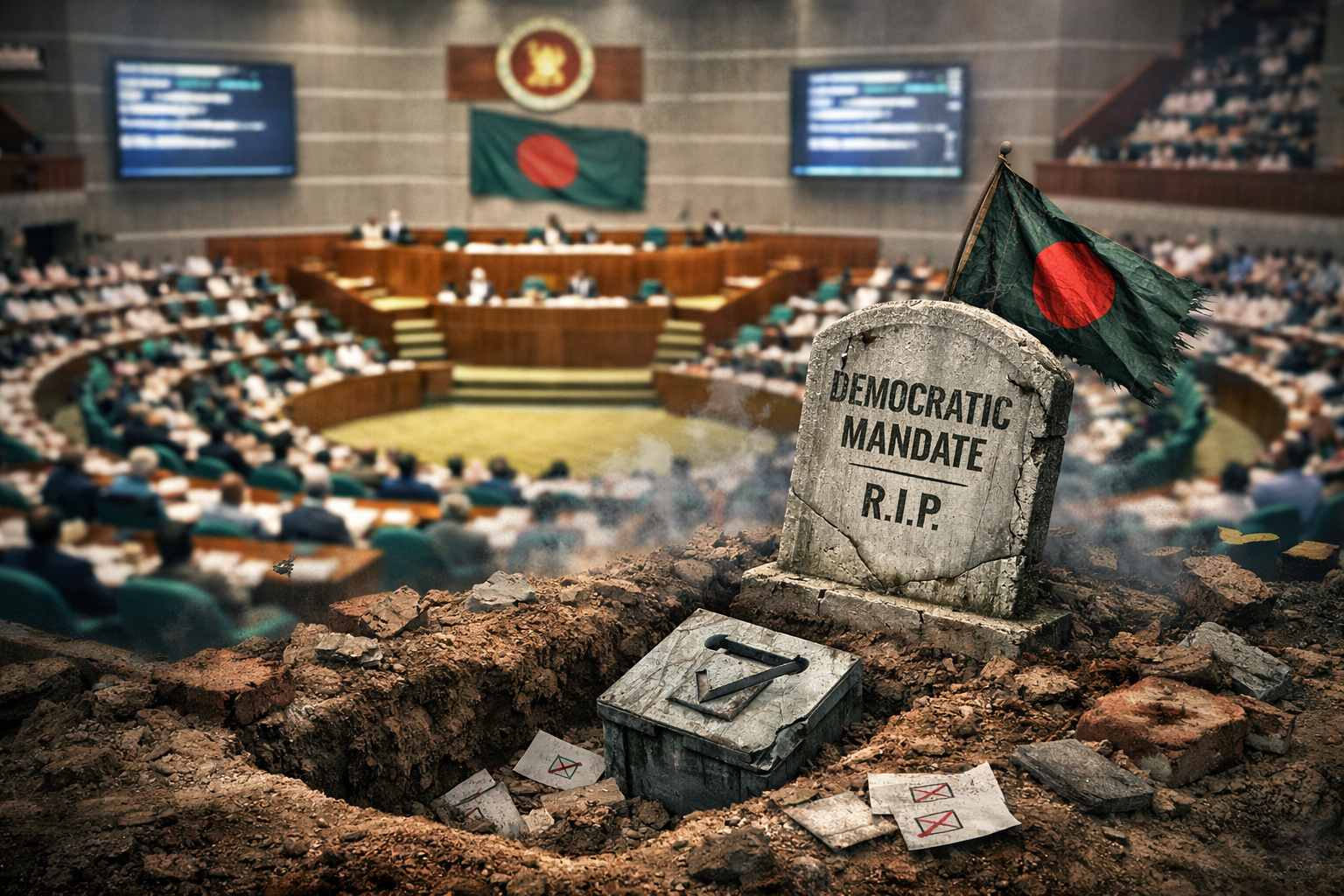
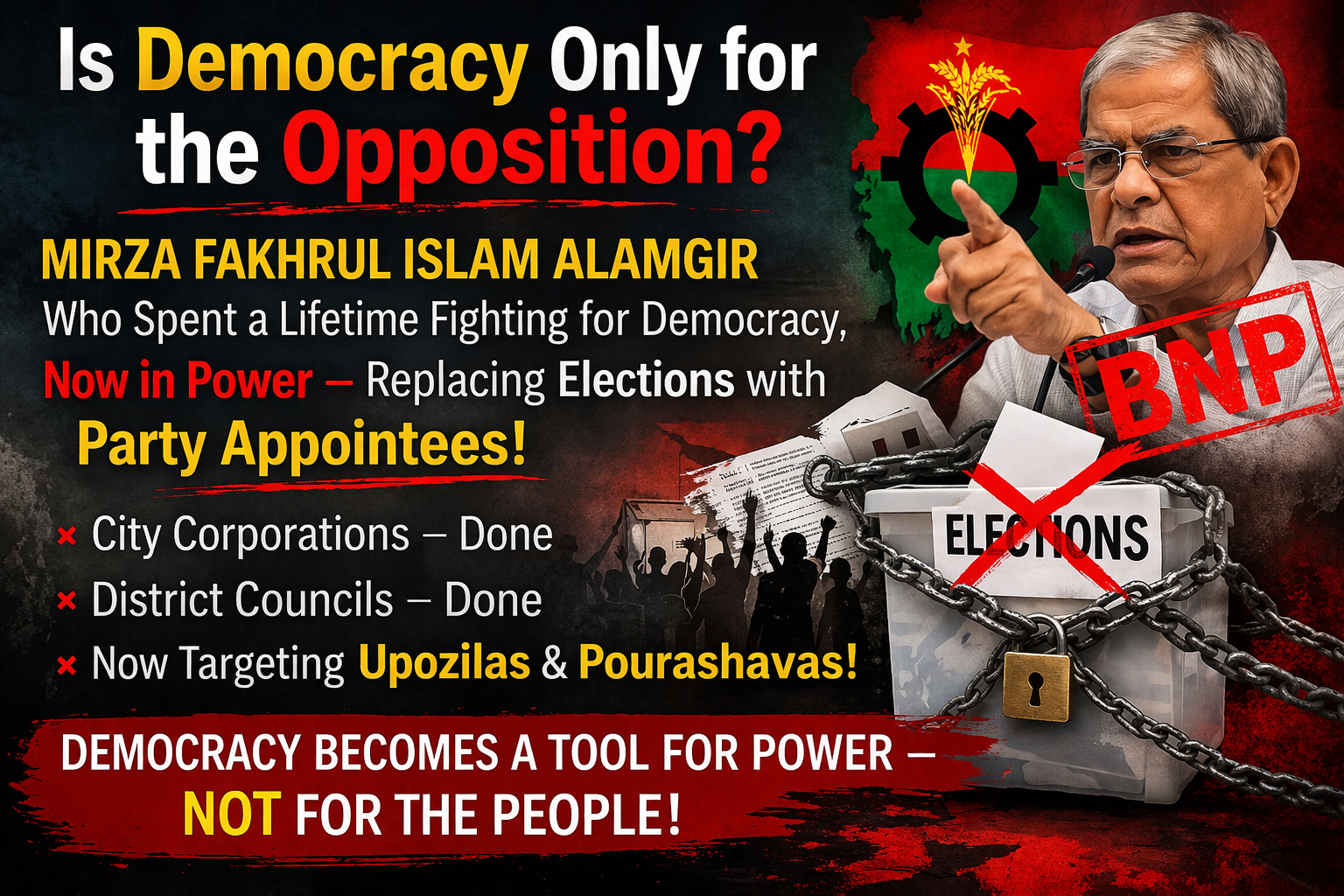
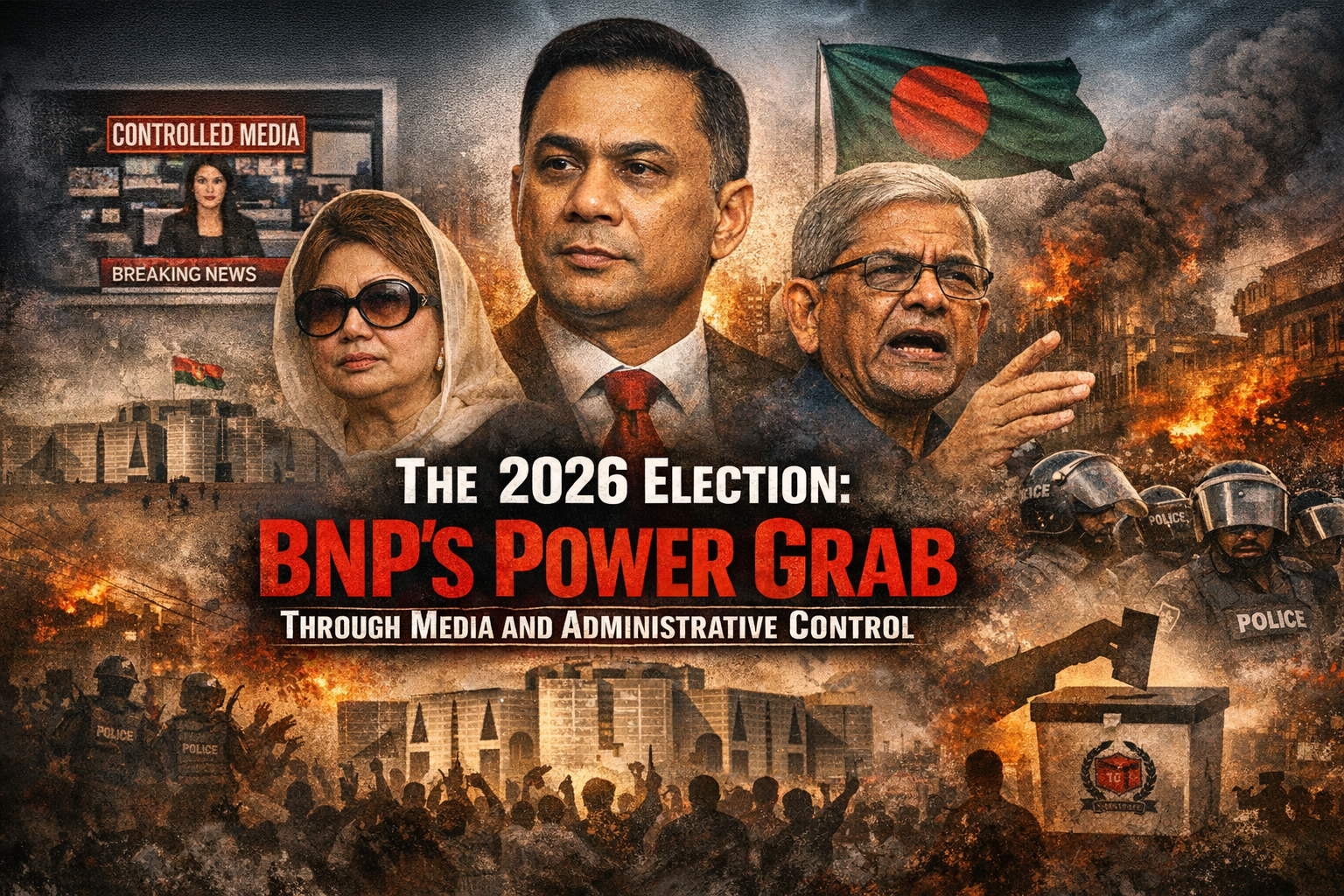
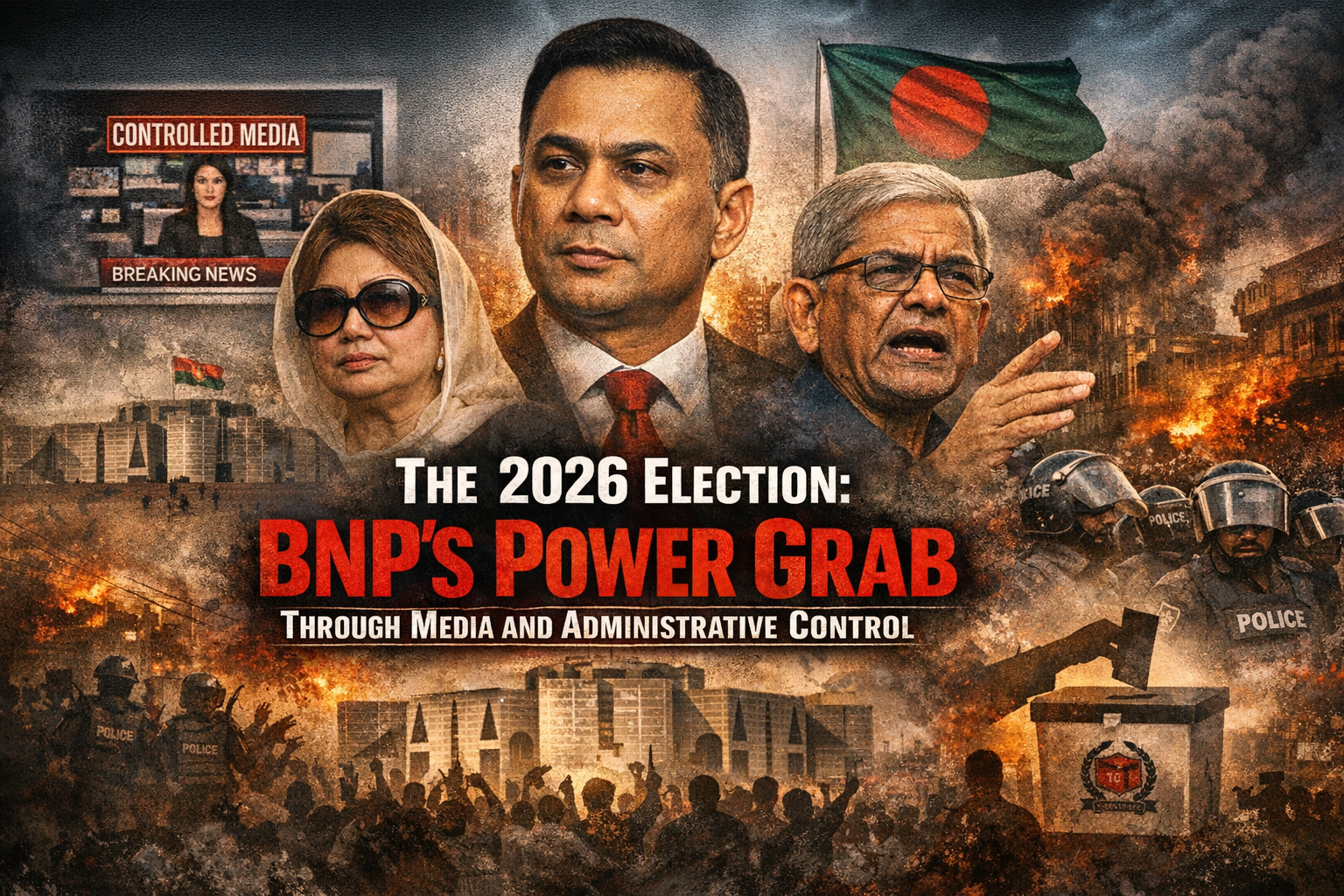
Politics in Bangladesh has long been intense and conflict-ridden. However, the political reality surrounding the 2026 national election has raised serious questions about the state of democracy in the country. According to many analysts, this was not merely an election; rather, it appeared to be a carefully orchestrated process of consolidating power through the combined influence of administration, media, and political forces.
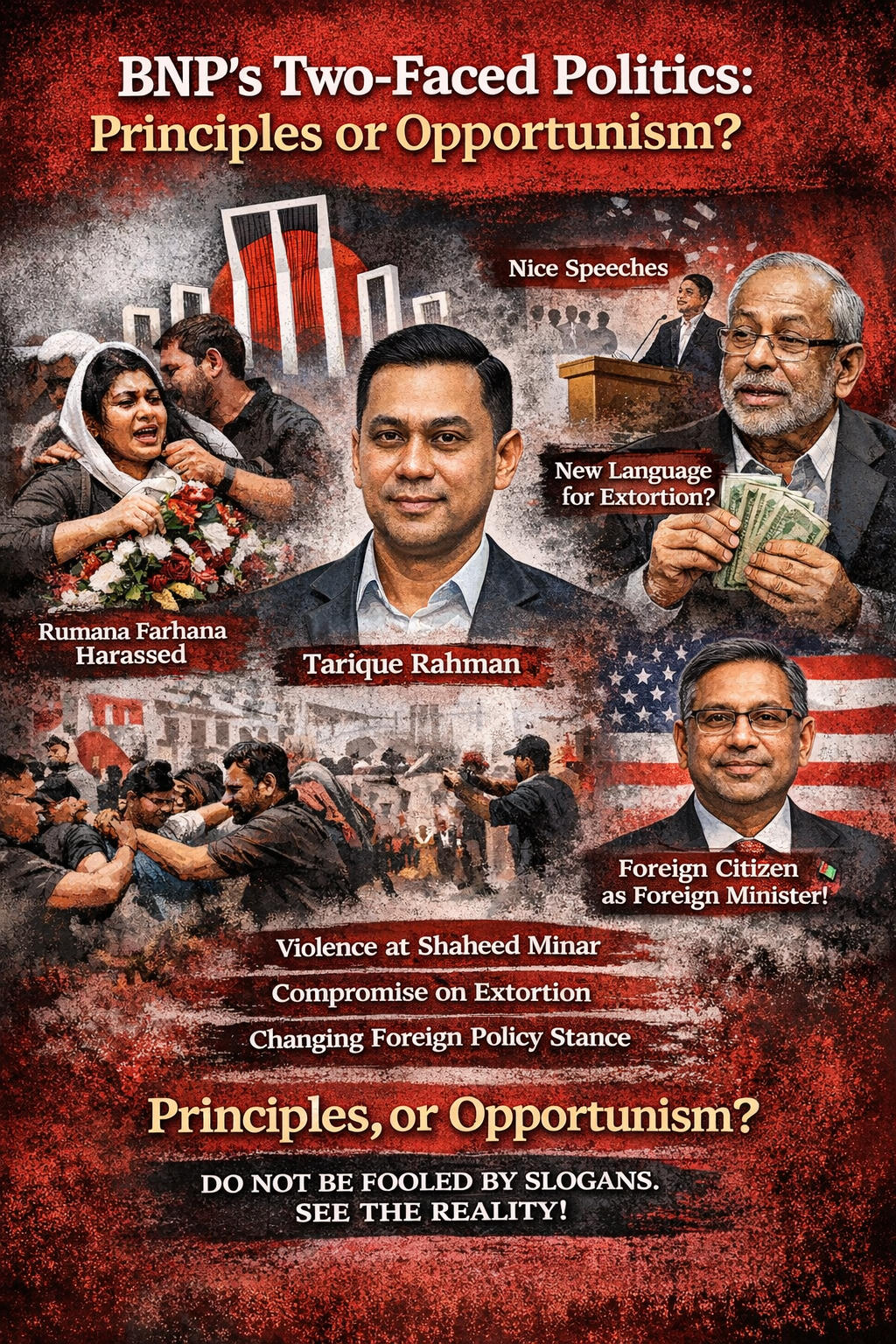
In the 2026 election, the BNP won by a large margin, and the party’s leader, Tarique Rahman, was sworn in as Prime Minister. Various reports indicated that the BNP secured a significant number of seats in parliament and formed the government.
However, this victory has prompted serious questions in political circles. Was it truly the result of a normal democratic contest, or was it a political reality shaped by administrative and media influence?
Influence Over the Administration: Opposition or Government-in-Waiting?
In a democratic state, the administration’s primary responsibility is to remain neutral. Yet, before the 2026 election, many observers noted behavior at different levels of the administration that appeared to create a favorable environment for the BNP.
Even before the election took place, several administrative decisions, the conduct of local officials, and aspects of the law-and-order situation seemed to be managed as if the BNP was already in power.
This reality raises a fundamental question: if the administration begins to act in favor of a particular political party, can the election truly remain competitive?
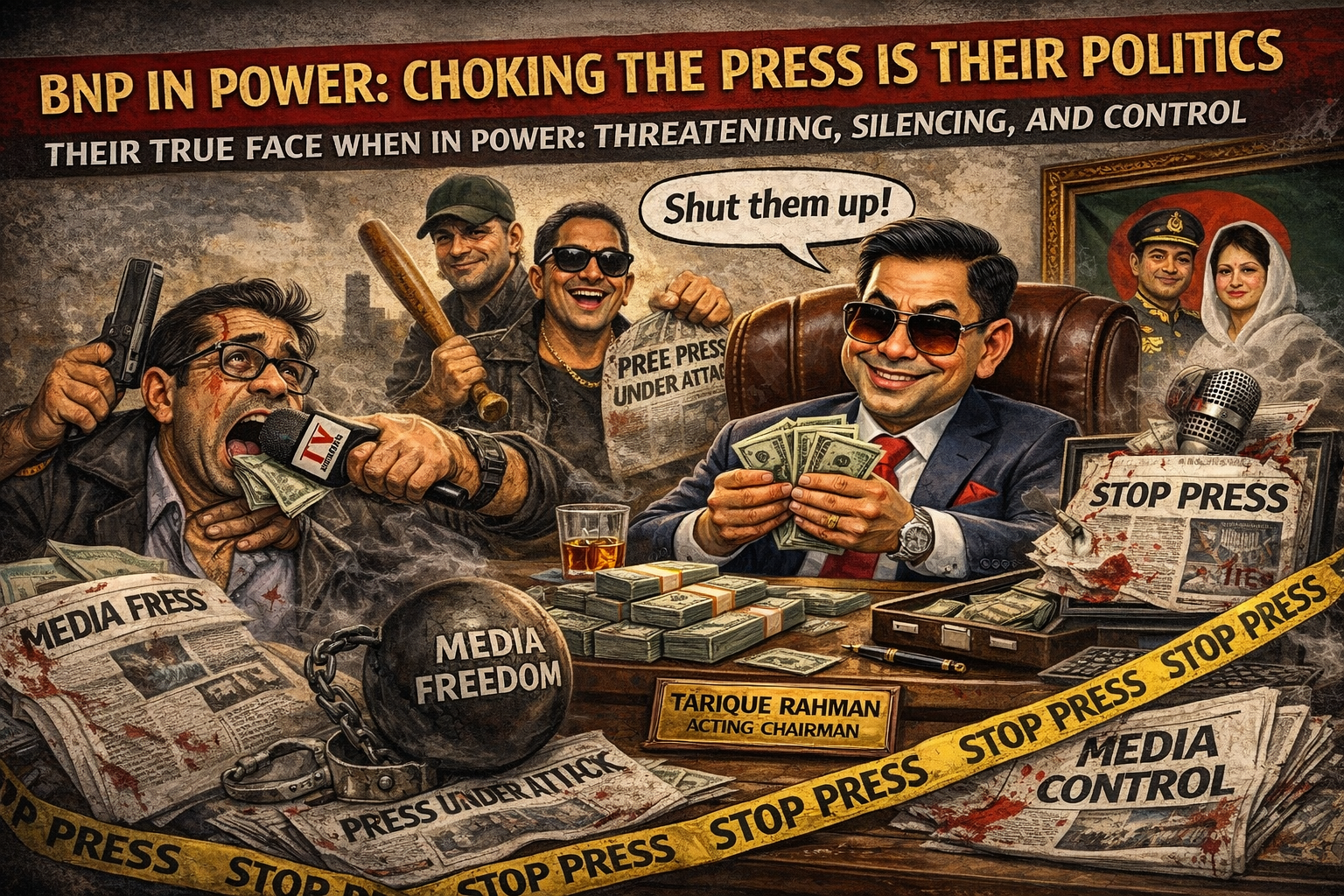
Media Strategy: The Politics of Controlling Public Perception
Another major factor in the 2026 election was the role of the media. Through social media platforms, online networks, and sections of the news media, political messaging was disseminated in a way that created a strong public perception that a BNP victory was inevitable.
Experts warned that during the election period, a large amount of misleading or manipulative content circulated across social media, which had the potential to influence voters’ opinions.
Such strategies represent a dangerous trend in democratic politics—where instead of allowing the free flow of information, public opinion is strategically shaped and managed.
The “Pre-Determined Result” Debate
A widely discussed issue regarding the 2026 election was the perception that the results seemed to be known in advance.
When a political party combines administrative influence, media campaigns, and organized political mobilization, election outcomes may sometimes be effectively determined long before voting day.
According to political observers, the BNP appeared to employ such a strategy—where the political environment was shaped in advance in a way that made the final outcome almost predictable.
A Concerning Signal for Democracy
The greatest strength of democracy is public trust. However, when a political party begins to exert excessive influence over administrative structures, media narratives, and state institutions, that trust begins to weaken.
Bangladesh has experienced many controversial elections in its history, but the 2026 election has raised a new question: do political parties genuinely believe in democratic competition, or are they seeking to transform state institutions into instruments of political power?
Conclusion
The 2026 election was not merely a political transition; it represented a major test for Bangladesh’s democratic framework.
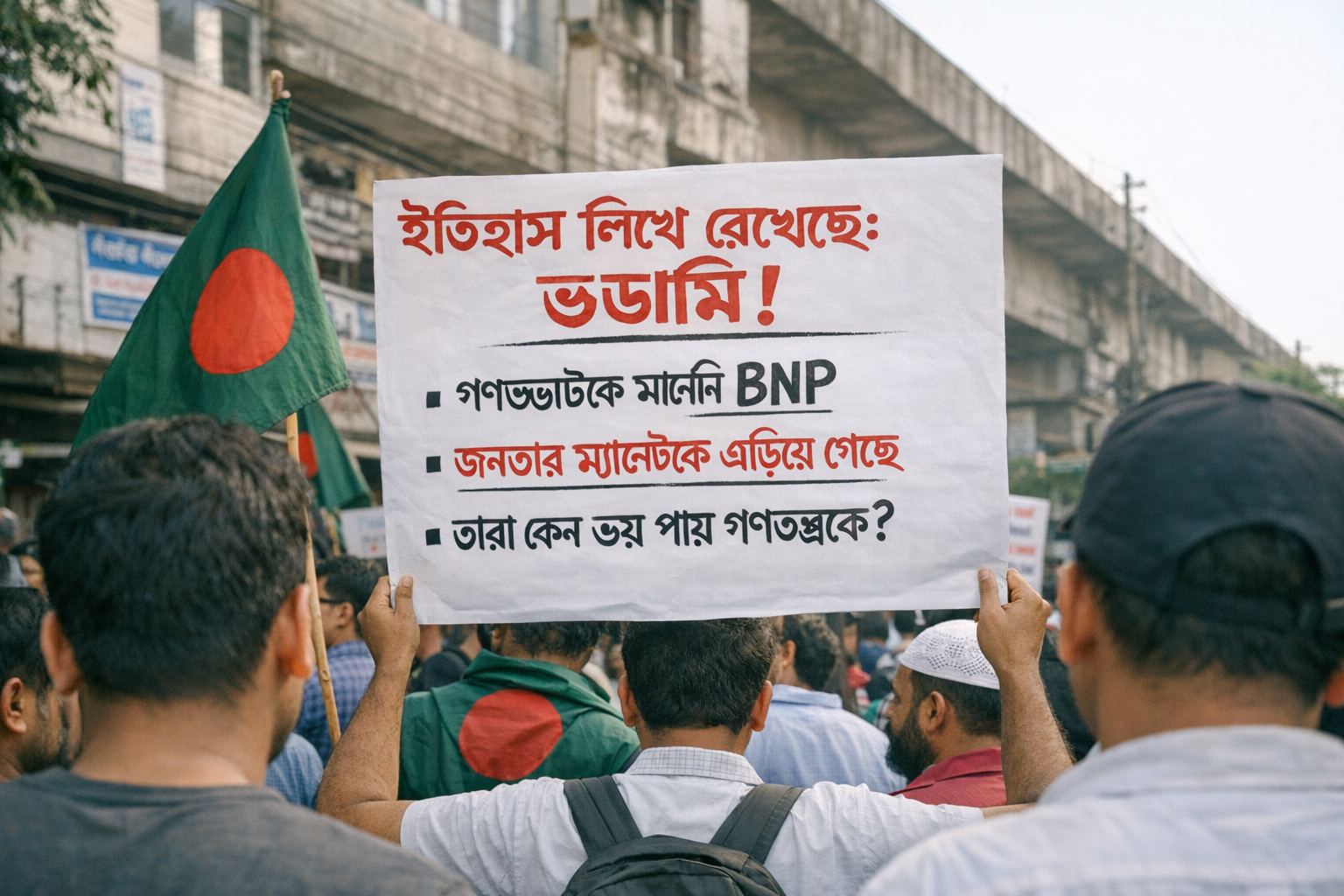
Political analysts have repeatedly raised allegations that the BNP came to power through a combination of administrative influence, media strategy, and organized political machinery.
If a political party captures power by bringing state institutions under its control, it sends a deeply troubling signal for democracy.
Because at that point, democracy is no longer determined by the people’s vote—it is shaped by strategies of power.