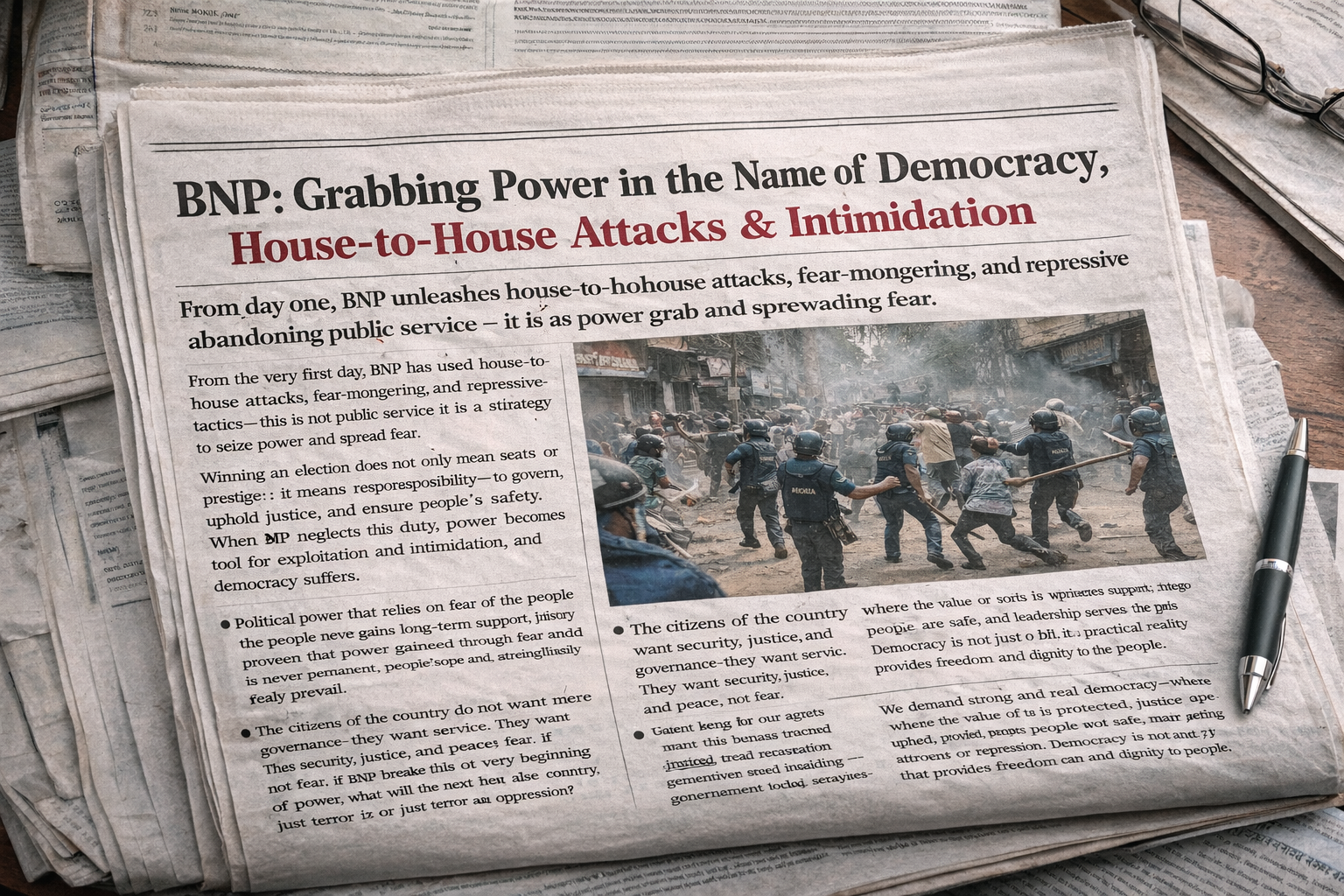
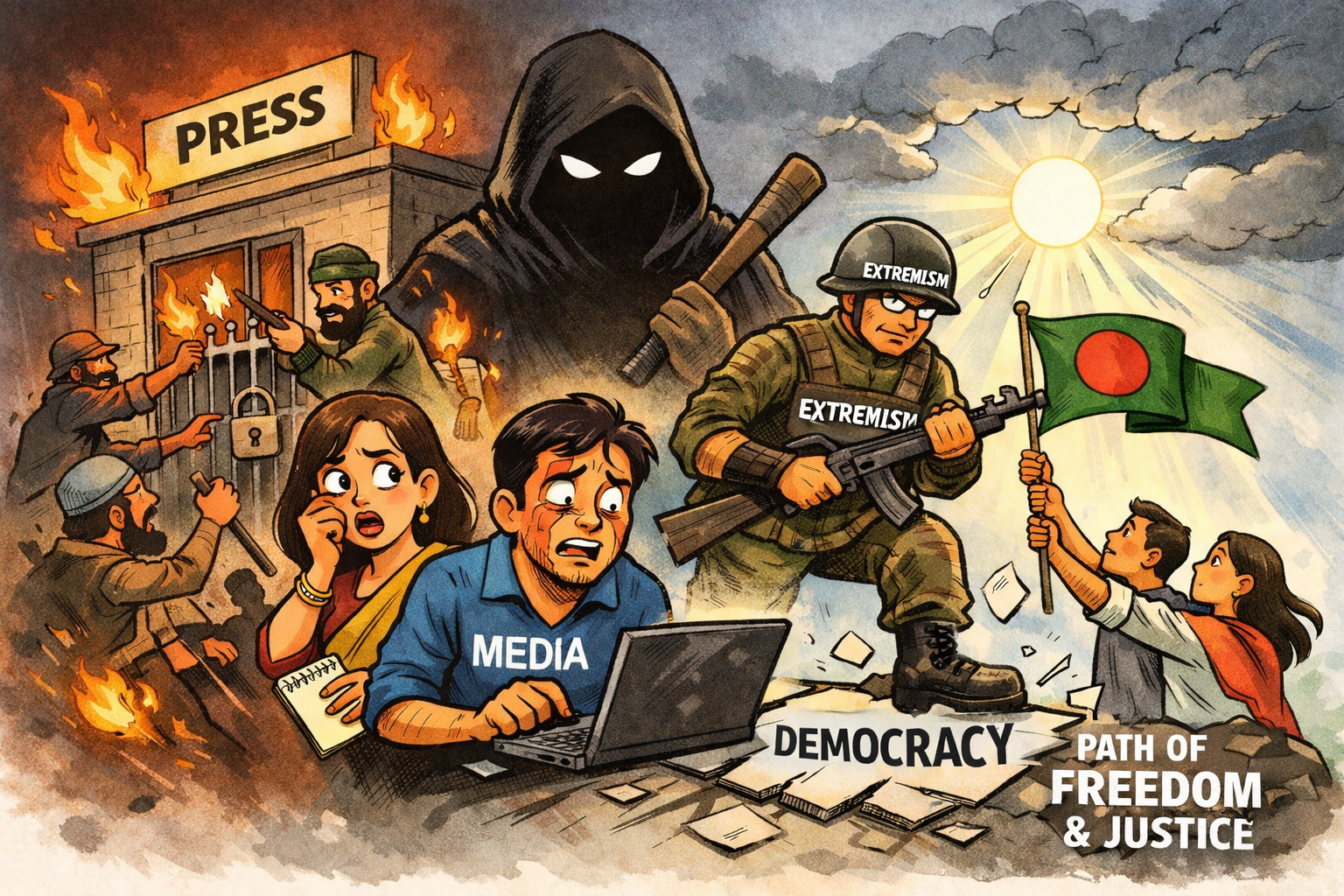
Writer: Apurbo Ahmed Jewel:- Having crossed the blood-soaked path of the July popular uprising, the dream of a new Bangladesh that we once envisioned now faces a profound crisis due to recent mob violence and attacks on the media. Statements from New Age editor Nurul Kabir and National Citizens’ Party convenor Nahid Islam depict a grim reality. The brutal attacks and arson at the offices of Prothom Alo and The Daily Star have been described by Nurul Kabir not merely as vandalism, but as a deliberate attempt to “burn and kill.”
When journalists were inside working, the locking of gates and obstructing the fire brigade—medieval acts of cruelty—proved that this was not an ordinary public riot. Nurul Kabir courageously pointed to the government’s apathy. Despite attempts to contact multiple levels of government during the incident, nearly two and a half hours passed without any effective action, indicating either indirect complicity or extreme failure within the state apparatus. Endangering the lives of employees in an independent institution over editorial differences cannot, in any way, be a sign of a healthy, democratic society.
In this context, the confession of movement leader Nahid Islam is even more alarming. He explicitly stated that the attackers were using the sacred slogans of the July uprising and the blood of its martyrs as a shield. It is deeply concerning that the very revolution fought against tyranny and injustice is now being used to create a form of “social sanction.” Nahid Islam acknowledged that such audacity would not have been possible without a combination of elements within the government, political backing, and long-planned animosity.
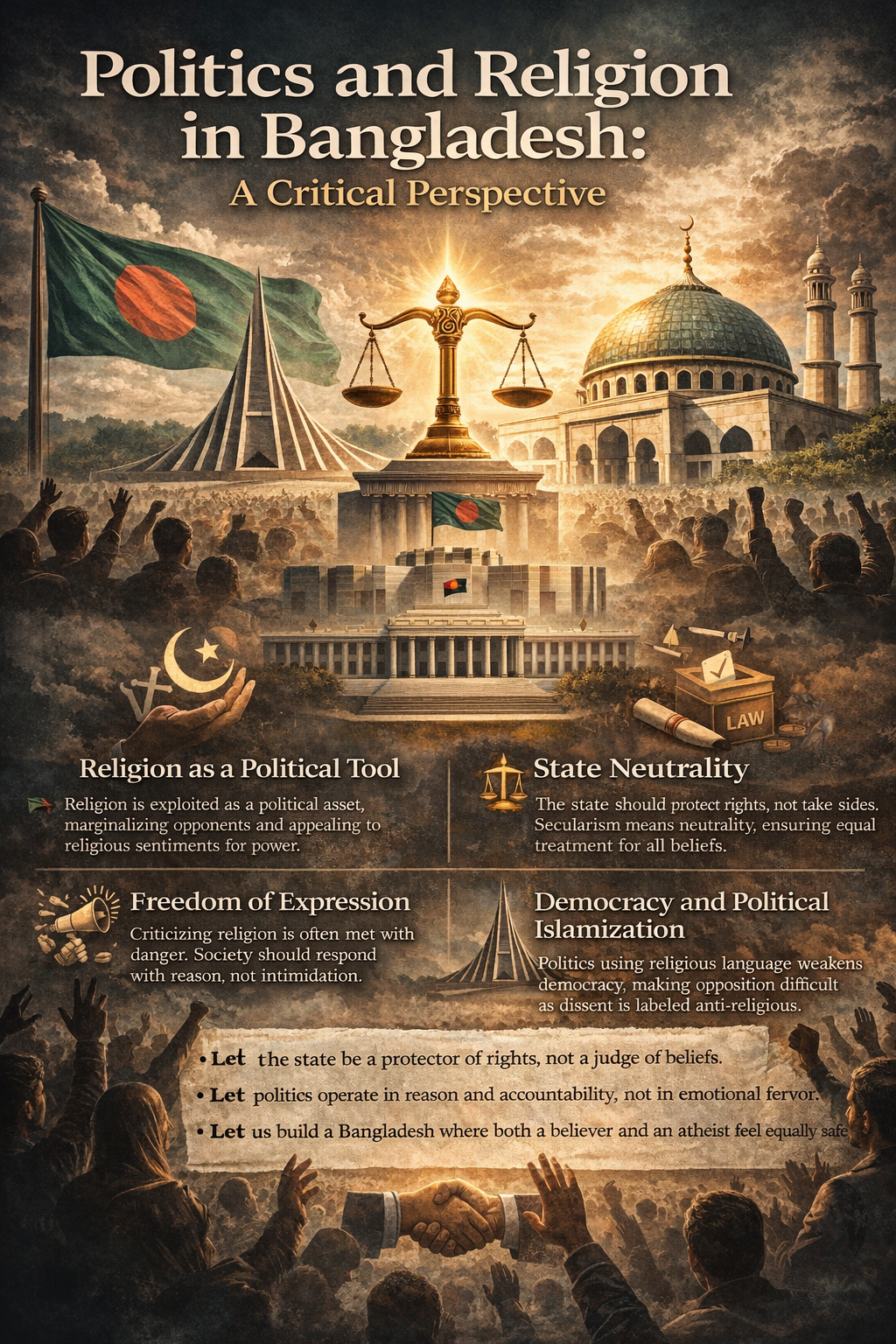
What was previously considered post-revolutionary unrest in the form of mob violence has now transformed into premeditated crime. When journalism and intellectual activity are labeled “liberal” and attacked, and the emotions of ordinary people are exploited to create a climate of fear, it becomes clear that a conspiracy is underway to block the path of democracy. The stark attack on the media points to a deviation from the path envisioned for post-revolutionary Bangladesh.
Drawing on his extensive experience, Nurul Kabir warned that if any civilized society tolerates such barbarity, it will not only destroy certain news organizations but also permanently obstruct the path to societal progress. According to him, safeguarding freedom of expression is not only the duty of journalists but a struggle to preserve the very existence of the state. He observed that among the attackers were forces, hiding behind religious slogans and attire, seeking to realize an extremist and fascist political agenda.
Meanwhile, Nahid Islam expressed deep regret that, on the night of the attack, when journalists’ lives were at risk, there were insufficient people on the streets to protect them—a massive moral failure. This situation demonstrates that, following the departure of a negligent government, a new form of “mobocracy” or extremism is emerging—directly opposing the true spirit of the July uprising.