Report: Apurbo Ahmed Jewel: There was once a prevailing idea in Bangladesh’s politics that religion is a matter of personal belief, and that the language of the state and politics should not be religious. Individuals may be devout, but religious doctrines should not be imposed in the making of laws, the protection of human rights, or the functioning of state institutions. This idea was not anti-religious; rather, in a society where people of diverse faiths coexist, it represented the minimum condition for peaceful cohabitation. In recent years, however, this principle has rapidly eroded.
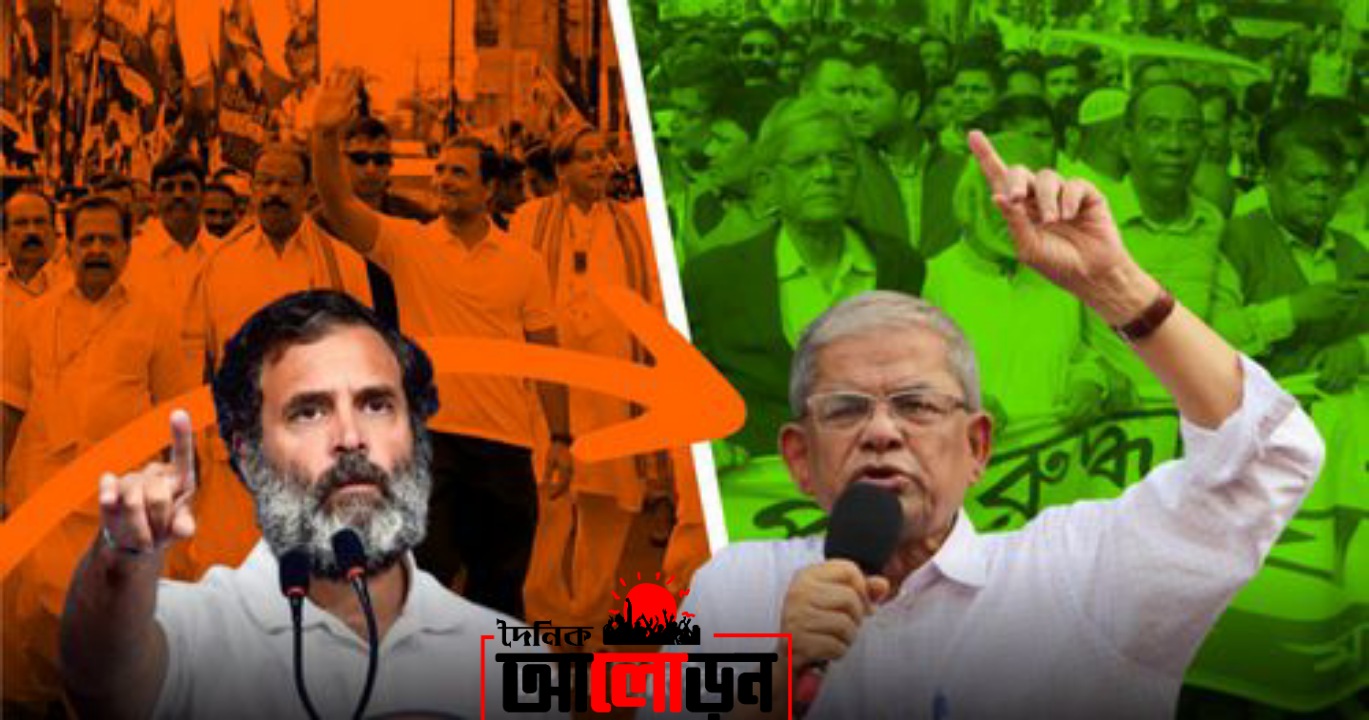
A look at global politics shows that this is not a problem unique to Bangladesh. Across the world, religion has re-entered politics—not as a means of spiritual or moral reflection, but as a tool for identity formation, division, and the capture of power. Christian nationalism in the United States, Hindu nationalism in India, and notions of cultural Christian identity in several European countries all reflect this trend. In many places, the majority religious identity is being positioned as the standard for citizenship, while people of different beliefs are increasingly viewed with suspicion.
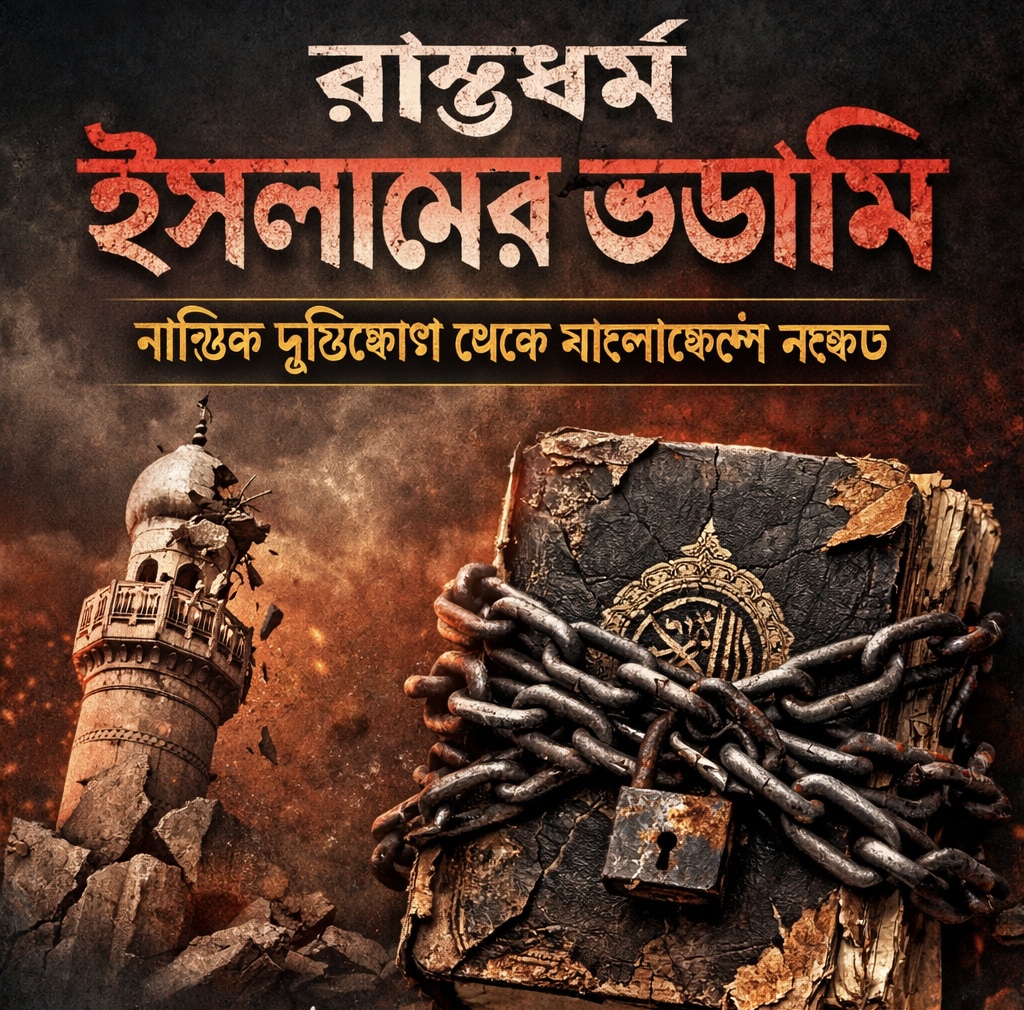
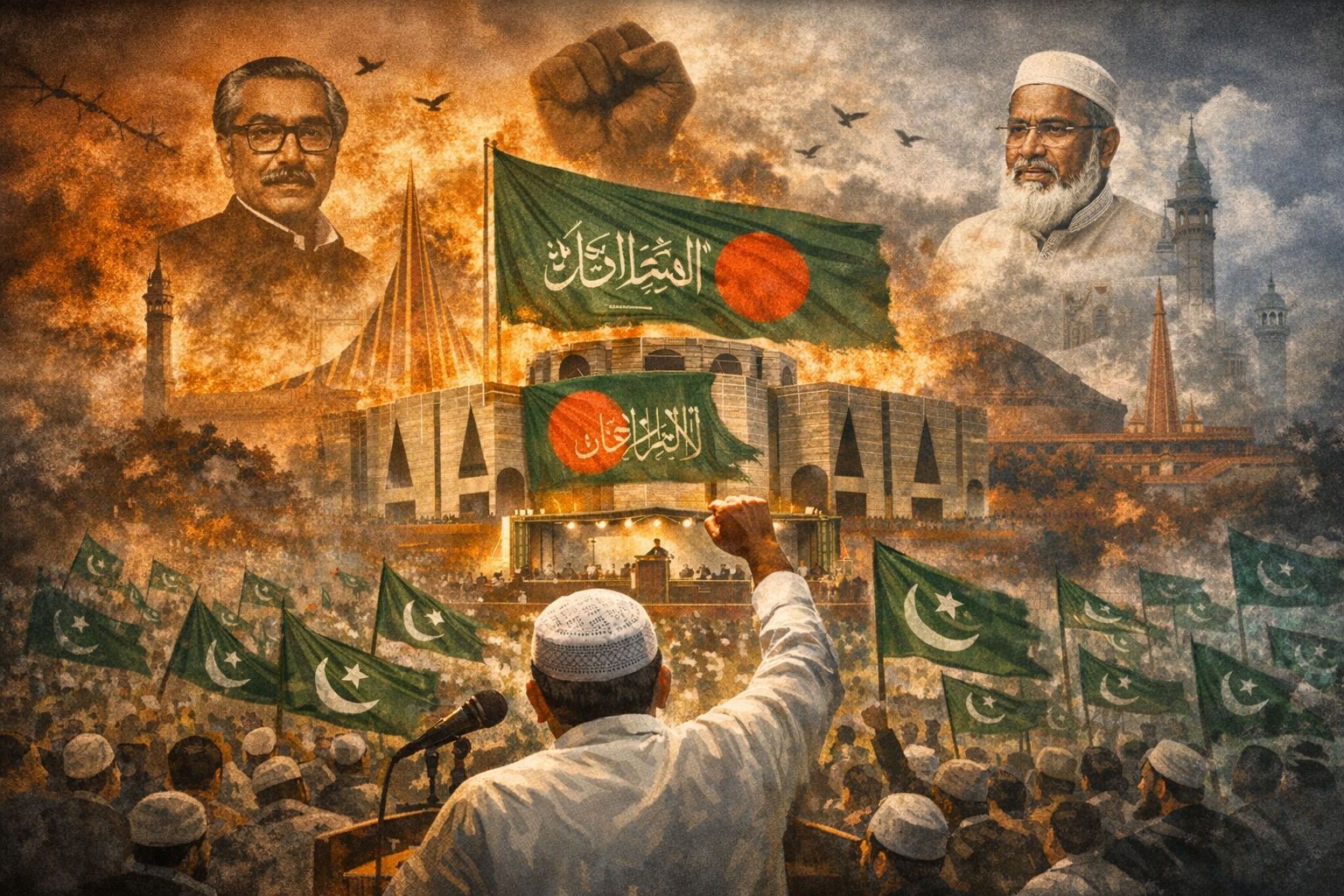
In Bangladesh, the rise of Islamist politics after the July ’24 mass uprising is particularly significant in the context of this changing political language. This is not merely the renewed activism of parties like Jamaat, but a broader attempt to once again make religious identity the dominant language of the state and politics—an effort in which they have been largely successful. Jamaat’s politics does not directly demand the establishment of a caliphate or the implementation of Sharia law. Instead, it employs terms such as the sentiments of the majority, Islamic values, and Western influence to create a conspiratorial atmosphere, suggesting that there is no alternative but to organize politically along religious lines.
This strategy is not new. Pakistan’s experience stands as a stark example. From its inception, attempts were made to construct religious identity as the foundation of state unity. Over time, the consequences have been disastrous. Minorities have been marginalized, dissent has been equated with blasphemy, and politics has become a test of faith. In Pakistan, criticism of the state or those in power is often preceded by scrutiny of one’s religious credentials. A similar pattern can be seen in countries such as Iran and Afghanistan, where, in the name of religious morality, the state has curtailed personal freedoms and civil rights.
India’s experience also offers an important warning for Bangladesh. Although the religion is different, the political strategy is strikingly similar. The rise of Hindu nationalism has fused citizenship so tightly with religious identity that the question of who is a “real” Indian has become a central political issue. For this reason, any attempt in Bangladesh to make the majority’s religious belief a benchmark for state policy is deeply concerning.
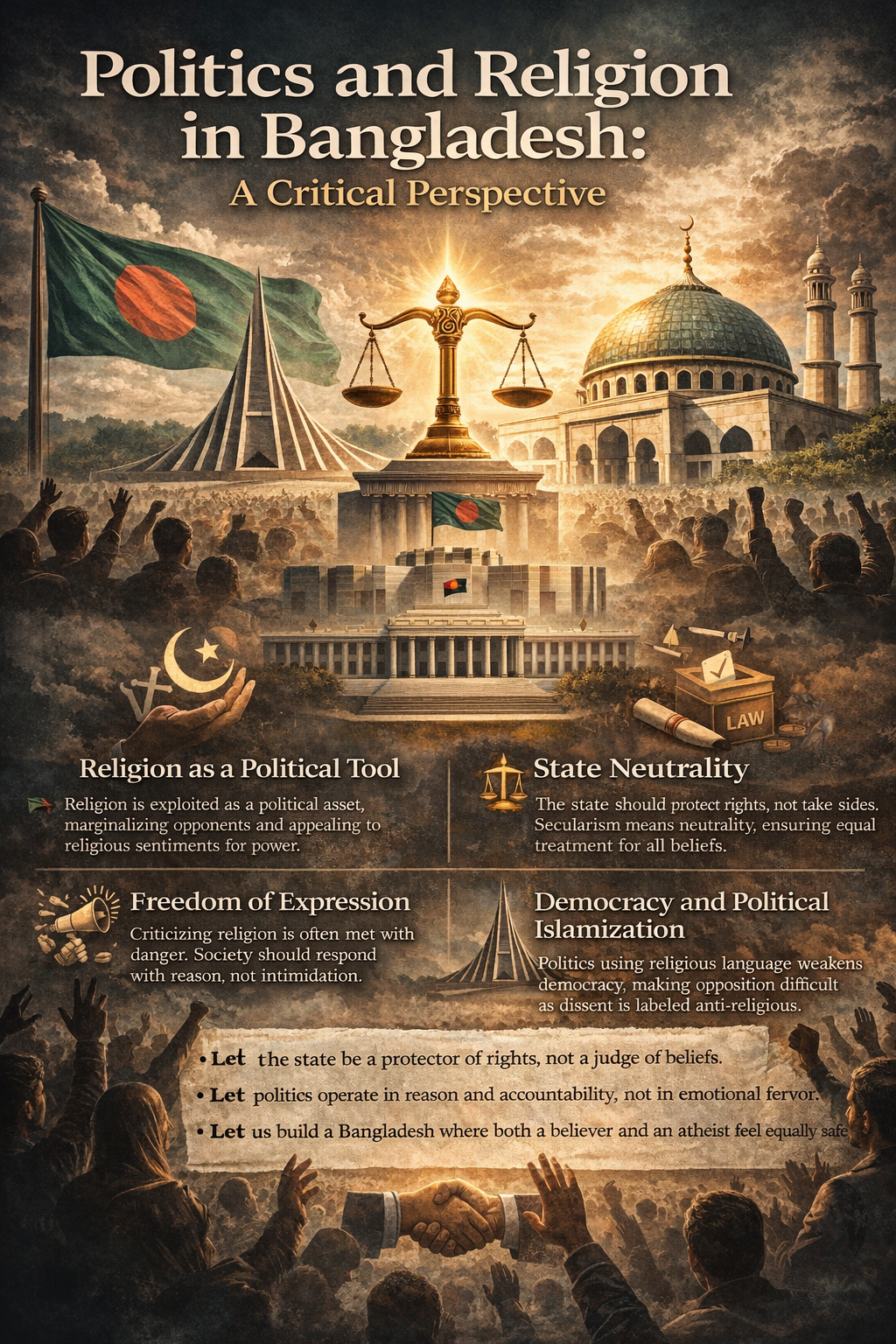
If religious language becomes the primary medium of politics in Bangladesh, its consequences will be far-reaching. The security of minorities will remain confined to paper guarantees, as the state will no longer be neutral. Dissenting views will lose their space in political debate and instead be transformed into allegations of blasphemy or religious अपराध. Law will be guided by faith rather than reason. Even if elections continue to exist, people’s rights will not.
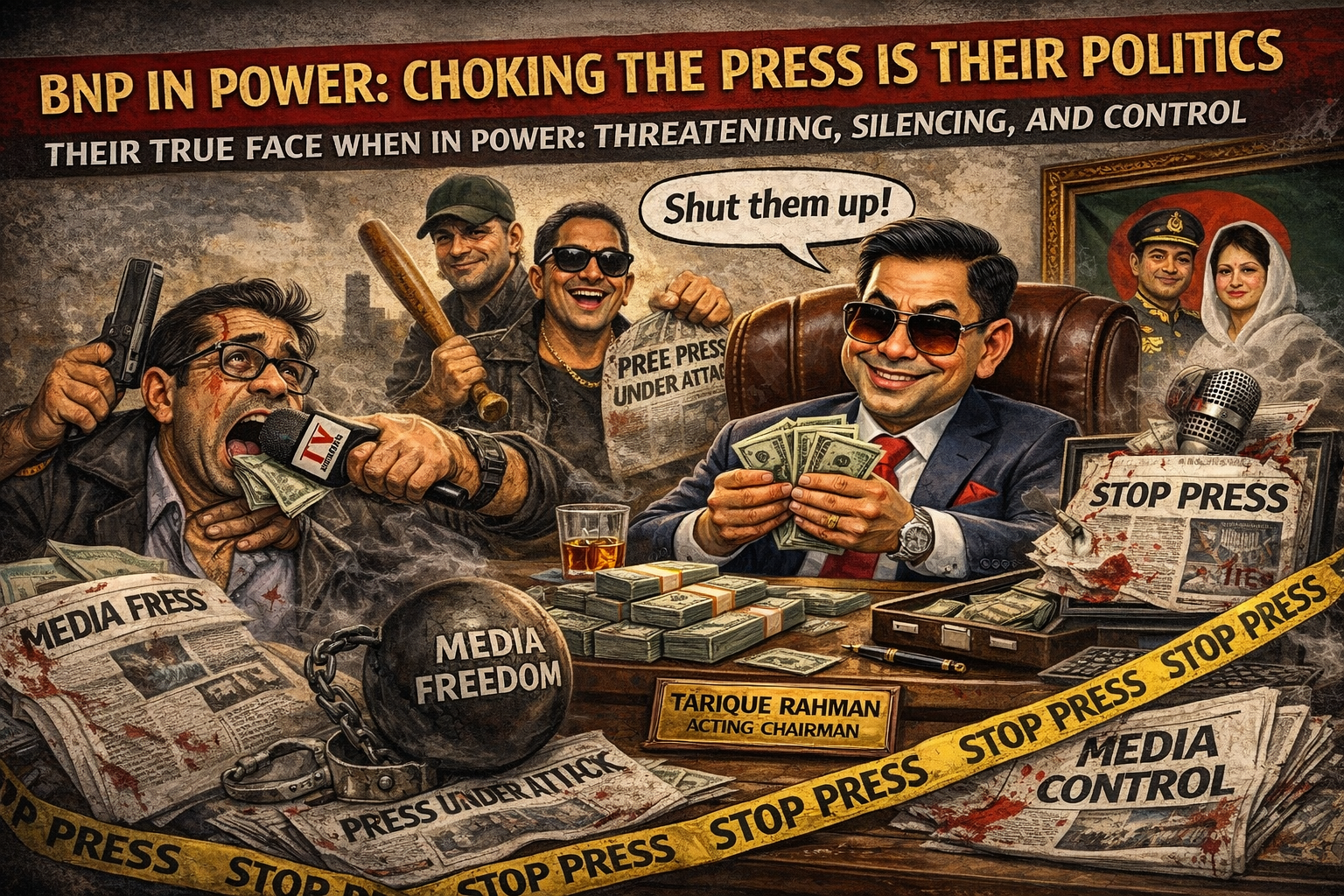
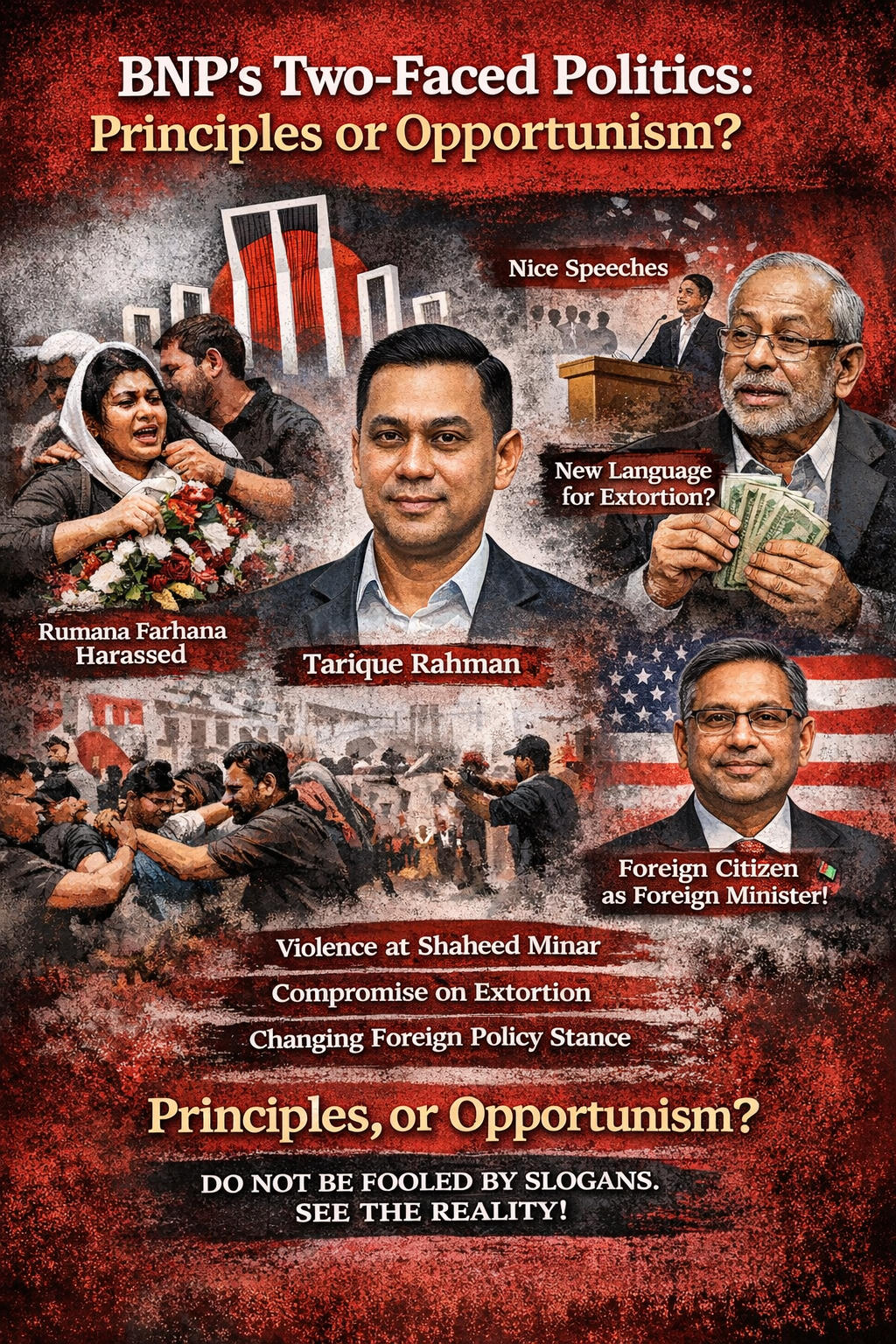
In this context, the recent Khatm-e-Nabuwwat conference held in Bangladesh deserves close attention. It was a regional gathering of South Asian Islamist politics, where Bangladesh is emerging as a new testing ground. Notably, a senior leader of the BNP attended the rally and stated that, if they come to power, they would consider declaring Ahmadis (Qadianis) non-Muslims. This indicates that even a centrist party like the BNP is now engaging in politics through religious language.
The problem is not religion itself. The problem begins when religion is used in such a way in politics that people of different beliefs are no longer regarded as equal citizens. The principle of secularism enshrined in Bangladesh’s constitution was not about being anti-religious. It meant that the state would neither examine nor impose anyone’s beliefs. If this principle is dismissed as irrelevant, the path that opens up ahead is one whose consequences we already know from the experiences of Pakistan, Iran, and Afghanistan.
Therefore, the current rise of Islamist politics should not be viewed merely as a matter of party competition. It is part of a far-reaching project to restore religious identity as the language of state politics. Once this path is firmly established, turning back from it will not be easy.